- Sub Hub Headlines
- Posts
- Sub Hub Headlines - March 2026
Sub Hub Headlines - March 2026
March 2026

Dani Emkay
March 02, 2026

If you want to support the pod and this newsletter consider using one of our codes:
SUBHUB15 🌈 15% off your purchase @ Wild Strides Paper Co.
SUBHUB25 🍊 25% off your purchase @ NEVERSECOND
SUBHUB20 🐝 20% off your purchase @ Beekeeper's Naturals
SUBHUB 🚲 10% off your purchase @ Poseidon Bikes
Welcome back to Sub Hub Headlines!
We’re grateful to have you here as we continue another year of racing, conversations, and coverage around the sport we love.
Before we dive in, we want to share something important.
This will be our final edition of Sub Hub Headlines on Beehiiv.❤️
It’s a little bittersweet to say. Beehiiv has been the platform that helped us build this newsletter into what it is today, and we’re incredibly thankful for everyone who’s been part of this chapter.🙏
At the same time, Sub Hub Headlines is officially transitioning to Substack.
For the month of March, we’ll continue publishing on both platforms (Beehiiv + Substack) to make the transition as smooth as possible. Beginning in April 2026, Substack will become our primary home.
Why the move?
Simply put, Substack gives us more room to grow. It’s become one of the most dynamic platforms for long-form storytelling, deeper analysis, and direct connection with our community. It allows us to expand what Sub Hub Headlines can be, from our monthly newsletters to sharing recent short trail headlines and news in real-time.
If you haven’t made the switch by the end of March, we’ll transition your subscription so you don’t miss anything. Of course, you’re always free to unsubscribe at any time.🥰
We’ll continue sharing updates along the way, and we’re incredibly thankful to have you with us as we step into this next chapter.
More soon, and as always, thank you for being part of The Sub Hub community.🫶
🗞 The Scoop: Approachable American Short Trail by EmKay
If you’re one of our long-time listeners then you know that one of the reasons Dani and I started the Sub Hub Podcast was that we felt short trail races were a much more accessible avenue into this sport than ultra. I mean, how many people enjoy spending their weekends on the trails with friends but don’t have the time or the money to invest in a 100 mile training plan? I’d say most of us! Since its a new year and lots of things are changing in the short trail world, I thought I would give my opinion on the most approachable (maybe not always accessible) series and races in this sport.
I’m going to start off this piece by saying…check out your local races first! Destination races can be exciting, but some of my most fun days have been at races that are in my backyard. If you’re a Northern California or Northern Nevada based athlete, the Silver State 50/50 Half Marathon and 50K are incredible options for a local and well-organized event. My other two favorite local races are FOURmidable 50K and the Way Too Cool 50K…both of which offer shorter distance races than 50K. The Canyons Endurance Runs are also on that list, but UTMB races are continuing to become for difficult to get into every year. It can be fun (and approachable) to line up close to home where you know which bed you’re sleeping in, what food you get to eat and which friends you’re going to hang out with after.
BUT, if you’re looking for a vacation with a race to add to your schedule, what are the best options? I think all uphill races are always the best option. One of the hardest things for many people to train for confidently and excel at is the downhill parts of a trail race. No matter where you live, you can likely find a treadmill with 15% grade to train on as well as get some flat workouts in to increase fitness for an all uphill race.
Some shorter vertical races include:
Broken Arrow Ascent in Olympic Valley, CA
Dragon’s Back Ascent in Mammoth Lakes, CA
Lone Peak Vertical Kilometer in Big Sky, MT
Loon Mountain Race in Lincoln, NH
Rendevous Mountain Hill Climb in Jackson, WY
Race the Cog in Gorham, NH
A few longer uphill races:
Pikes Peak Ascent in Manitou Springs, CO
Cerro Gordo Silver Run in Keeler, CA
Mountain Washington Road Race in Gorham, NH
So strap on those trails shoes and start running uphill! We hope to see y’all out at one of these iconic uphill races in the future. And if you think I’m absolutely CrAzY for suggesting uphill races as approachable, shoot us a DM and let us know what you’re favorite short trail races are!
Sub Hub Stories: Cirque Series - An Evolution🏔️
We interviewed Tom Hooper and Steve White in a podcast episode to dive deeper into the new races that Cirque Series has added to their calendar this year. The episode will come out this Friday, March 5. In the meantime, you can learn more about this year’s Cirque Series with these answers from Race Director Steve White.
What inspired the creation of the Cirque Series, and how did it all begin?
Julian Carr and his dog, Lexie, were frequently lapping the notorious Mount Olympus in the Central Wasatch. Mount Olympus is a 7 mile and roughly 4,300 foot out-and-back trail that averages 24% grade, with the final quarter mile summit scramble approaching 40% grade. In other words, it's steep. Julian felt like he was building strong mountain fitness and wanted to sign up for a race that emulated his training: less than 10 miles, steep and technical climbing and descending, and summit views. At the time, there were few races, none domestic (Mt Marathon in Alaska being the only exception), that existed that fit the bill. Seeing that there was a major hole in the industry, Julian decided to start the Cirque Series as he felt the primal feeling of standing on a peak with friends is unbeatable.
The Cirque Series started in Utah and has gradually expanded to Colorado, Wyoming, Washington, and the East Coast. What motivated the decision to expand beyond Utah?
In our first season, 2015, we produced races in Utah (Alta, Snowbird, Deer Valley) & Colorado (Crested Butte). We've always envisioned a nationwide series. We are grateful to be expanding to new mountain communities, as the people at each mountain are just as interesting as the mountain itself. Cirque Series is a celebration of the high alpine & showcases the people that make the communities at each venue special.
Are there plans to evolve the Cirque Series into a true points-based series that potentially requires qualification for a championship or final?
There has been much internal discussion to determine what model would suit Cirque Series best. The direction we see it going in the next year is to modify the way points are acquired by runners throughout the season, using only the best four or five results from the season, minimizing the need to travel for all races. By changing this, we hope that the overall series winner is an elite that intentionally crafted their schedule to prioritize Cirque Series and had multiple podium performances during the season. We understand there are other premier events that are instrumental in an athlete's professional development and it's unrealistic to believe an elite could make it to each event in an ever-expanding series. With that said, be on the lookout for a specific "Final" down the road.
What do you believe sets the Cirque Series apart from other trail running race series?
Our vision is to create an experience, not just a race. We believe the key components to creating a memorable experience are fourfold: an inspiring and technical course, at least one summit bop, a party waiting for participants at the finish line and an all-inclusive environment.
How do you decide which new locations or races to add to the Cirque Series? What qualities are you looking for?
As we have expanded the Series, we try to ensure that any addition to the Series acts as an extension to what's already in place. When we think of Cirque Series courses, a couple defining characteristics include: steep, technical, and intuitive. We're running up and down a mountain in the most efficient way possible.
There are logistical considerations as well, like assessing the facilities provided by a ski resort, safety access, proximity to established running communities, and market saturation.
For someone new to trail running, or new to the Cirque Series, what’s the most important thing they should know before toeing the start line?
You're in for a good time! At the end of the day, that's why we're out here. Our courses aren't designed to be limited to a certain demographic. We have had participants as young as 6 and as wise as 82 years old. We truly believe that with the right training, they are attainable for everyone.
If you had to describe the Cirque Series in just three words, what would they be?
Energetic, Inspiring, and Extreme
Results Recap
In case you missed any action in the short trail space, we’ve got you covered. Here, we’ll share races worthy of attention in this niche corner of the sub-ultra trail running world.
***indicates an athlete who has previously served a doping ban
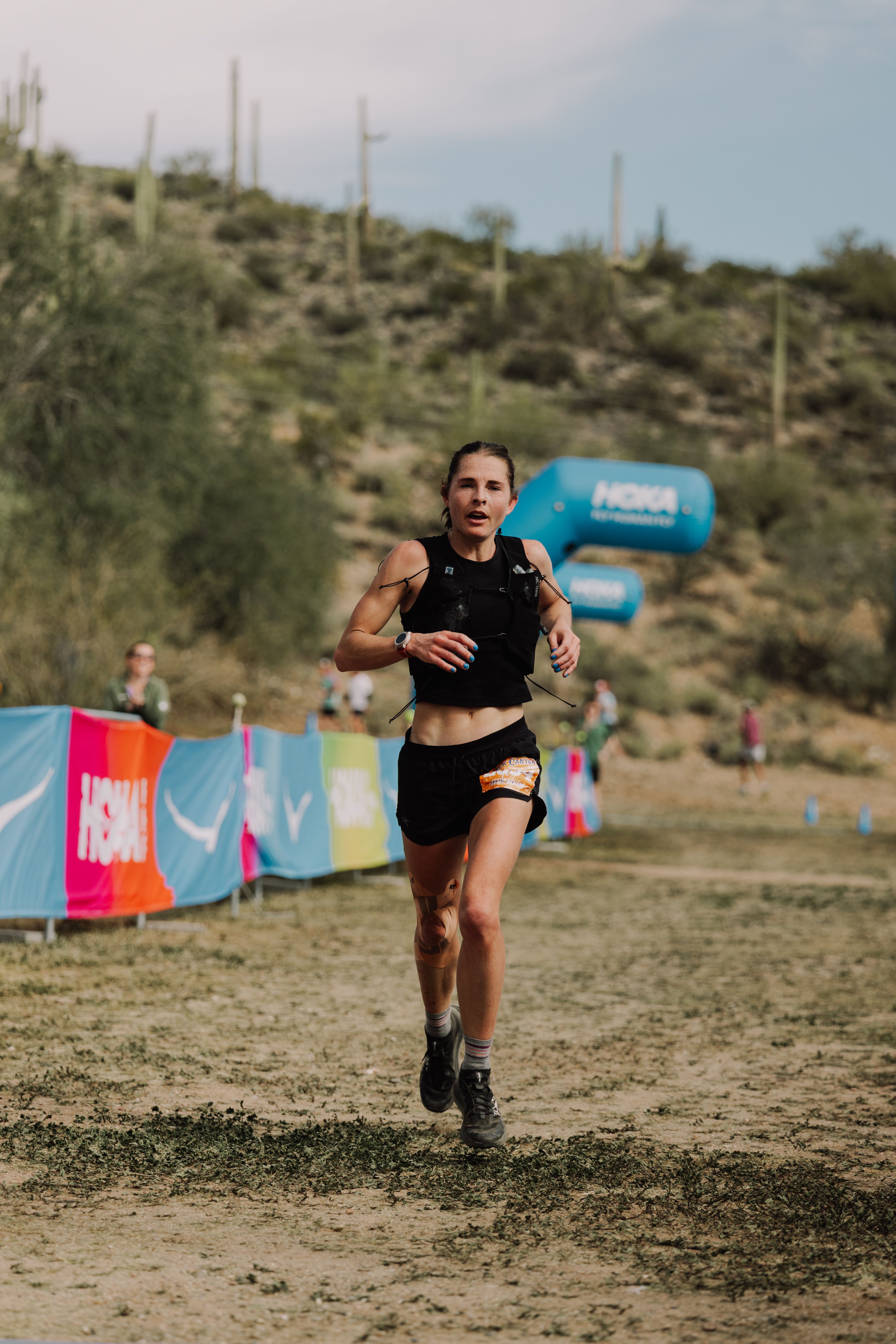
Jane Maus wins the Black Canyon 50K. PC: Somer Kreisman @somerrunner
February 15th
Black Canyon 50k - World Trail Majors Short Trail
Women
Jane Maus – 3:47:04
Liz O’Connor – 3:52:30
Lindsay Allison – 3:55:44
Men
Seth Ruhling – 3:16:29
Adam Peterman – 3:18:18
Cade Michael – 3:18:43
February 13th
Tarawera 50k - UTMB World Series
Women
Robyn Lesh - 4:05:35
Jemima Cooper - 4:12:31
Julia Anderson - 4:19:37
Men
Samuel Macaulay - 3:36:23
Charles Hamilton - 3:38:23
Sam Rout - 3:41:02
Current Series Rankings
***indicates an athlete who has previously served a doping ban
🏔Skyrunner World Series Ranking - Skyrunner is the first series to kick off their races! While only one race has occurred so far, below are the rankings to start the season.
Women’s | Ranking | Men’s |
|---|---|---|
🇨🇦Kalie Mccrystal | 1 | 🇵🇪Jose Manuel Quispe |
🇩🇪Tanja Löwenhagen | 2 | 🇦🇷Genaro Crisostomo |
🇵🇪Rosalia Zegarra | 3 | 🇺🇸Morgan Elliot |
🇦🇷Ayelen Liberal | 4 | 🇳🇿Hill Weston |
🇸🇪Lina El Kott | 5 | 🇦🇷Fran Muñoz |
🇪🇸Júlia Garriga | 6 | 🇫🇷Franco Paredes |
🇦🇷Maira Mardones | 7 | 🇦🇷Maximo Mercader |
Ekaterina Luzina | 8 | 🇦🇷Clément Schortanner |
🇦🇷Barbara Dana Rojas Eggenschwiler | 9 | 🇦🇷Nicolas Maximiliano Alvarez |
🇦🇷Carolina Soledad Veliz | 10 | 🇦🇷Alejandro Vera |
There are currently no other rankings available, view the other notable short trail series calendars in last months edition!
We’ve teamed up with Wild Strides Paper Co. to make some awesome stickers! They now come in a sticker pack for an even better price.

Trail Throwback
Trail Throwback is our space for the stat junkies (like us 🙃), history buffs, and trail nerds who love connecting the dots between past and present spotlighting the performances and people who helped build the sport we love.
Before Golden Tickets andbefore global circuits, the early-season calendar in the U.S. revolved around two defining races: Way Too Cool 50K and Chuckanut 50K.
Year after year, strong performances at Way Too Cool and Chuckanut have signaled who is ready for a big season ahead. These races show who built real fitness over the winter and who is prepared to compete at the highest level. Way Too Cool rewards speed and efficiency, while Chuckanut rewards strength and resilience. Together, they’ve long served as early indicators of both fitness and athlete identity.
Decades later, they still play that same role, quietly connecting generations and reminding us that every season begins by answering one simple question: Who did the work this winter?
These classics by the numbers..
Way Too Cool 50K🐸
Founded: 1990
Location: Cool, California
Elevation Gain: ~4,000 ft
Distance: 50K (31.1 miles)
Founders: Pat and Sandy Whyte (Sierra Express Running Club)
Course Record (Men): 3:04:48 — Patrick Smyth (2015)
Course Record (Women): 3:41:56 — Megan Roche (2015)
Race Director / Organizer: NorCalUltras (Julie Fingar)
Known for: Fast, highly runnable terrain
Chuckanut 50K🌲
Founded: 1993
Location: Fairhaven, Washington
Elevation Gain: ~5,000 ft
Distance: 50K (31.1 miles)
Course Record (Men): 3:26:31 — Francesco Puppi (2024)
Course Record (Women): 4:01:23 — Jodee Adams-Moore (2013)
Race Director: Krissy Moehl
Known for: Technical ridgelines, exposed mountain terrain
Trail Training Tip: March Means Mechanics
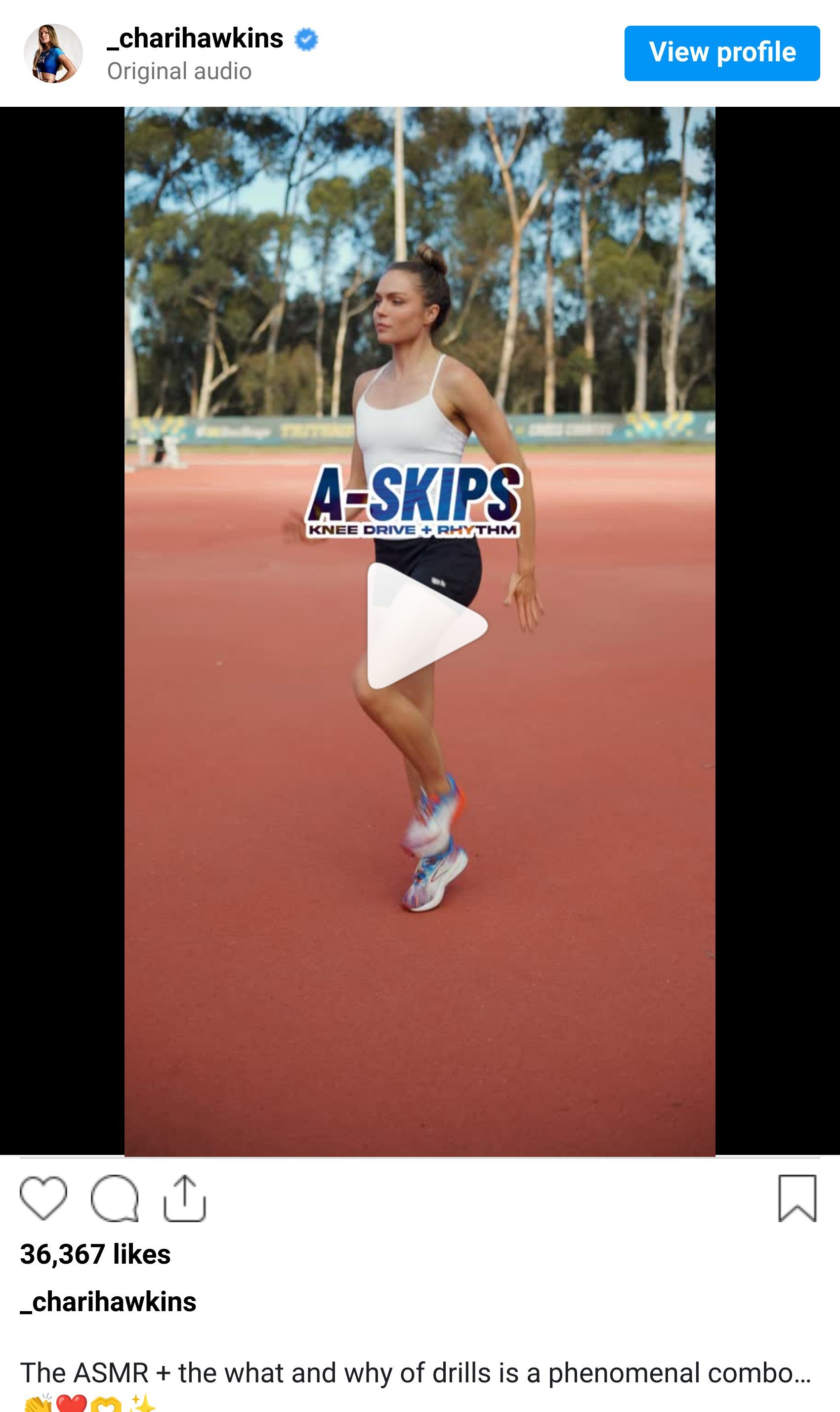
As I’ve returned from injury this winter, one of the first things I intentionally reintroduced into my routine has been running form drills. I’ve committed to them every Monday, and the payoff has been immediate. My stride feels coordinated, responsive, and efficient despite taking 4 months completely off, and I know that is largely due to drills.
This time of year, many athletes are coming out of a winter filled with cross-training—biking, elliptical, swimming, skiing. These are incredible tools for building aerobic fitness while reducing impact, and they play an essential role in long-term development. But none of them perfectly replicate the specific neuromuscular demands of running.
Running is a skill. And like any skill, it needs to be practiced.
Form drills help rebuild that skill. They reinforce coordination, posture, stiffness, and timing, the small details that allow you to translate fitness into forward motion efficiently.
Form drills should ideally be part of your routine year-round, but spring is an especially important time to bring them back with intention. They help bridge the gap between general fitness and running-specific performance—and set the foundation for the faster work that lies ahead.
Here is a great video from one of the great american track athletes, Olympian Charli Hawkins.
SHH’s Athletes of the Month
Welcome back to Athletes of the Month, spotlighting the performances and moments shaping the sub-ultra trail scene right now.
Check out last month’s AOM’s here.

After a breakout 2025 season, Jane Maus has carried that momentum seamlessly into 2026, further establishing herself as one of the top American women in the short trail discipline.
At the Black Canyon 50K, Maus delivered a masterfully executed race, staying composed and in contention through the early and middle stages before making her move when it mattered most. She stopped the clock in a blazing 3:47:04, securing the victory and setting a new course record.
With continued consistency and confidence, she is quickly becoming one of the most reliable and dangerous competitors in any runnable 50K she enters.
The question now is: what’s next?
The only race currently on her UltraSignup calendar is the Broken Arrow SkyRace 46K, where she finished an impressive 4th last year, a performance that earned her a spot on Team USA. With that experience under her belt and her trajectory continuing upward, it’s fair to assume she’ll return with even bigger ambitions. As always, Broken Arrow will feature one of the deepest fields of the year, making it the perfect stage for Jane to continue her charge into 2026.
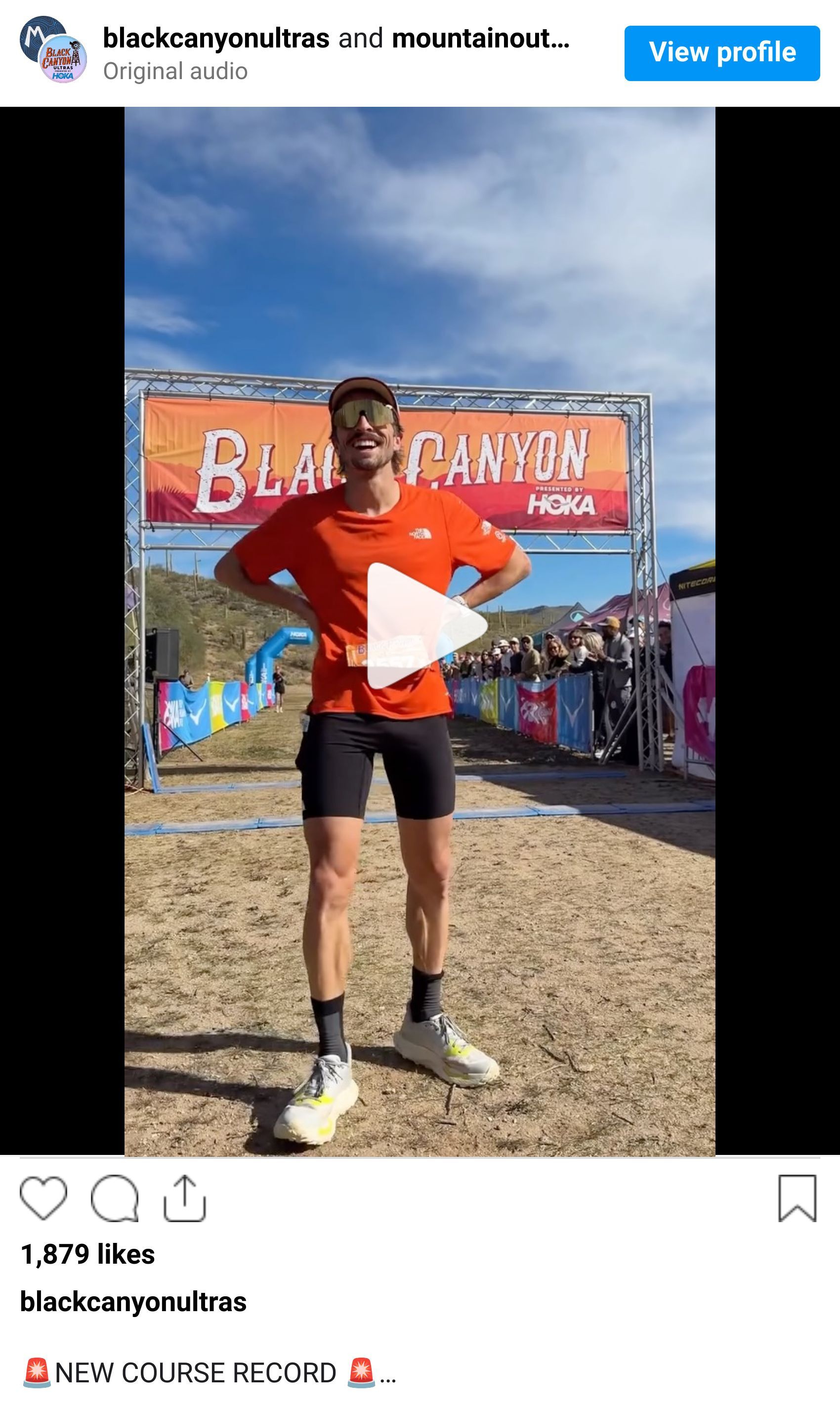
Seth Ruhling delivered one of the most commanding performances of the early 2026 season at the Black Canyon 50K, showcasing exceptional fitness as he builds toward the Western States 100 later this year. After positioning himself near the front early, Ruhling steadily increased the pressure over the second half of the race, ultimately pulling away to secure the win in a new course record time of 3:16:29. In doing so, he not only rewrote the record books but added to the growing momentum of what is quickly becoming one of the most competitive early-season 50Ks on the calendar.
At this point, it’s clear that Seth can excel across a wide range of terrain, but his dominance on fast, runnable 50K courses is becoming impossible to ignore. Following his victory and course record at last year’s Canyons 50K, this performance further cements his reputation as one of the most reliable forces in the discipline.
When it comes to runnable 50Ks, Seth Ruhling is no longer just a contender—he’s a favorite. Because simply put, he doesn’t miss.
Looking Forward
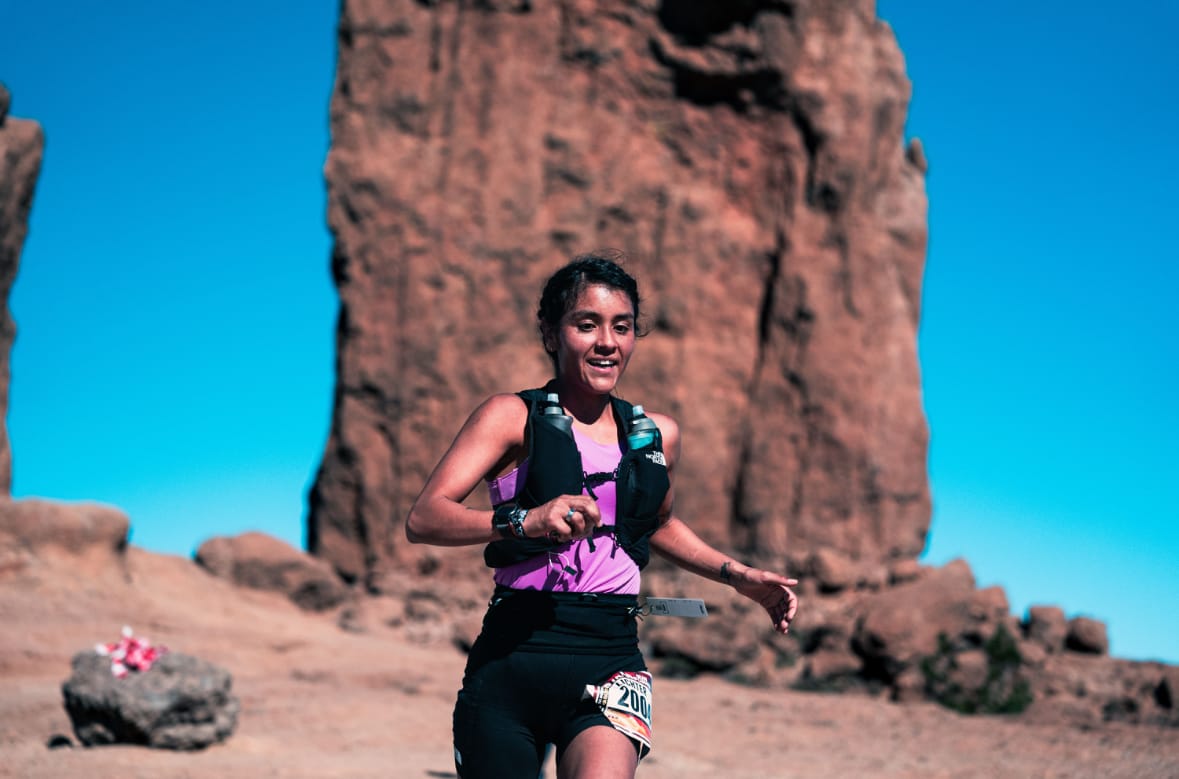
Last year’s TGC 47km women’s champion - Jennifer Licther - photo cred: @shitinthewoods
After the early Golden Ticket counterpart 50Ks (we need to come up with a name for these) set the tone in February, March brings a mix of iconic domestic races and key international showdowns that begin to shape the sub-ultra season.
On the U.S. side, Way Too Cool 50K (March 7) remains one of the most beloved early-season benchmarks. With its fast, rolling terrain and deep history, it consistently attracts athletes looking to test their legs and establish early fitness.
A few weeks later, attention turns to Chuckanut 50K (March 21), which returns for its 32nd edition. Like Way Too Cool, Chuckanut is steeped in history and known for its unpredictable Pacific Northwest weather. Its exposed ridgelines and technical terrain have long made it a proving ground for mountain athletes transitioning into race season.
That same weekend, we also see the continued rise of The Big Alta (March 20–22), offering both 28K and 50K options in the famous Marin area in California. As a newer addition to the calendar with significant media backing and growing visibility, it will be interesting to watch how it coexists with legacy races like Chuckanut as it continues to establish its place in the early-season landscape.
Shifting to the international scene, the spotlight turns to Transgrancanaria’s 47K (March 4–8), one of the premier early-season clashes. Held on Gran Canaria in Spain’s Canary Islands, it consistently draws many of the world’s top short-distance athletes and has become known not only for its competitive fields, but also for the way it builds anticipation through its athlete announcements (which we love the trading cards idea).
Meanwhile, the Skyrunning World Series is already underway, with the Merrell Andes Mountain Skyrace in Chile (March 7) and the Acantilados del Norte Skyrace in Spain (March 14) helping establish early momentum. These races often give the first indication of which athletes are prioritizing the Skyrunning circuit and positioning themselves for the overall title.
What races are we missing, and which ones are you most excited to follow this month?